PTSD Is Also a Physical Illness!
January 28, 2025
Self-Concept versus Actual Self
January 28, 2025
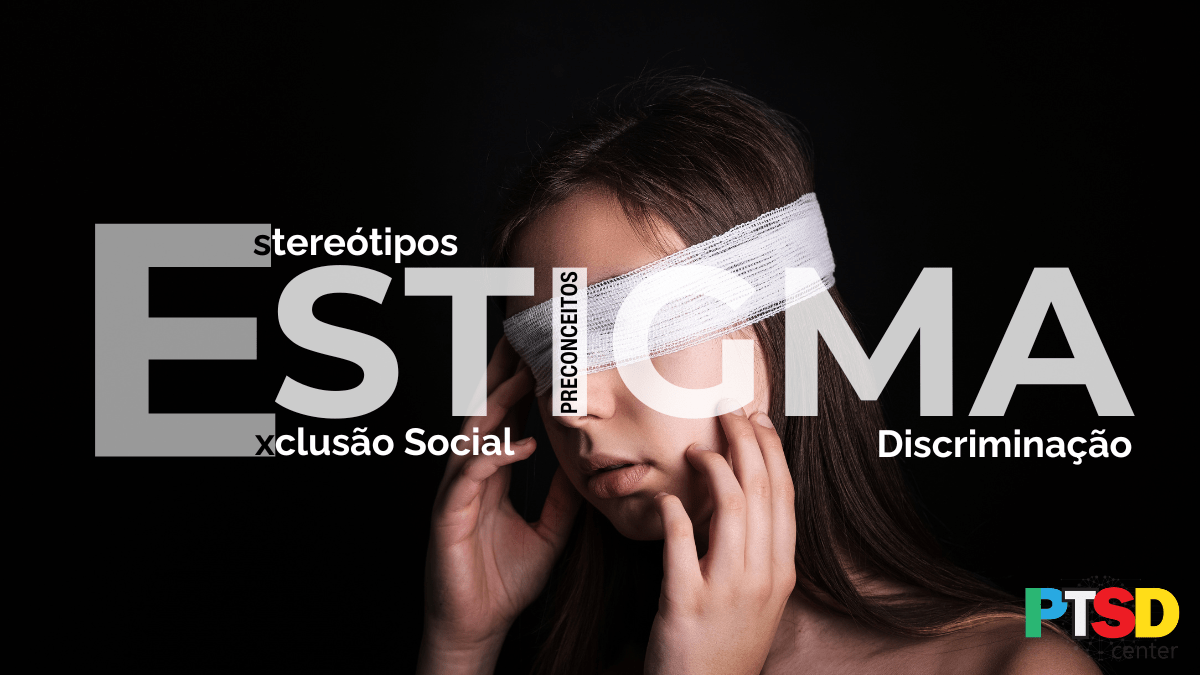
Stigma
Several studies show that people generally know little about mental illnesses and often react negatively to those living with them, perceiving them as relatively “dangerous”, “dirty”, “unpredictable” or “worthless”.
This initial perception becomes a set of “stereotypes” – preconceived images and ideas based on insufficient or inaccurate knowledge – giving rise to feelings of fear, mistrust and aversion towards people living with mental illness.
Fear is the most primitive emotion and has an important role in the survival and protection of the species. All animals, from insects to humans, are born with the ability to detect and respond to certain dangers. Some responses are innate, while others are learned through social transmission.
The way we think affects how we feel and behave!
People often struggle with the “unknown” because they perceive it as a threat or danger. They feel uncomfortable and tend to avoid distress, which can lead to prejudice: value judgements with negative connotations, such as “bad” or “ugly”, and favourable or unfavourable opinions formed in advance without sound evidence or critical reflection.
This sense of unease, anxiety and discomfort can lead people to behave in discriminatory ways, for example through rejection, differentiation or labelling, and to distance themselves socially from those who are stigmatised.
When we refer to someone with a mental health condition as “sick”, “mad” or “schizophrenic” (stereotypes), we reveal not only a lack of understanding but also negative beliefs and values (prejudice) and an unhelpful, uncivilised attitude (discrimination and social exclusion). These labels add to the suffering of those affected and perpetuate stigma.
As you may know, mental health professionals sometimes use the Diagnostic and Statistical Manual of Mental Disorders (DSM-5), which classifies and categorises mental health conditions and names clinical diagnoses. It is not intended to classify or categorise people!
The deinstitutionalisation of people with mental illness – the closure of psychiatric hospitals, the opening of community services and therapeutic centres, and outpatient care – has helped narrow the perceived gap between mental health and mental illness by increasing contact between the general public and people experiencing mental health difficulties.
Alongside this change in approach, greater information about the realities of living with mental health difficulties has, fortunately, helped reduce the stigma associated with them.
The idea that people with mental illness are violent is often reinforced by the media (and even by political language that uses “schizophrenic” as a derogatory term). This view is not supported by the evidence: people with mental health conditions are often more likely to be victims of violence than perpetrators.
Stigma towards people with mental health difficulties is associated not only with stereotypes of unpredictability and violence but also with the denial of their human rights. It often contributes to social exclusion and disadvantages people seeking employment, housing, education and even treatment.
Stigma can cause self-stigmatisation and low self-esteem, contributing to poorer quality of life. Discrimination against people with mental health difficulties often extends to their families, friends and even mental health professionals and services. Mental health may also receive discriminatory levels of funding within public health policy.
We can all choose… to do things differently!
Founder & CEO PTSD Center